


· Von halit burak capraz
Montessori Bookshelf Ideas: Transforming Your Child's Learning Space
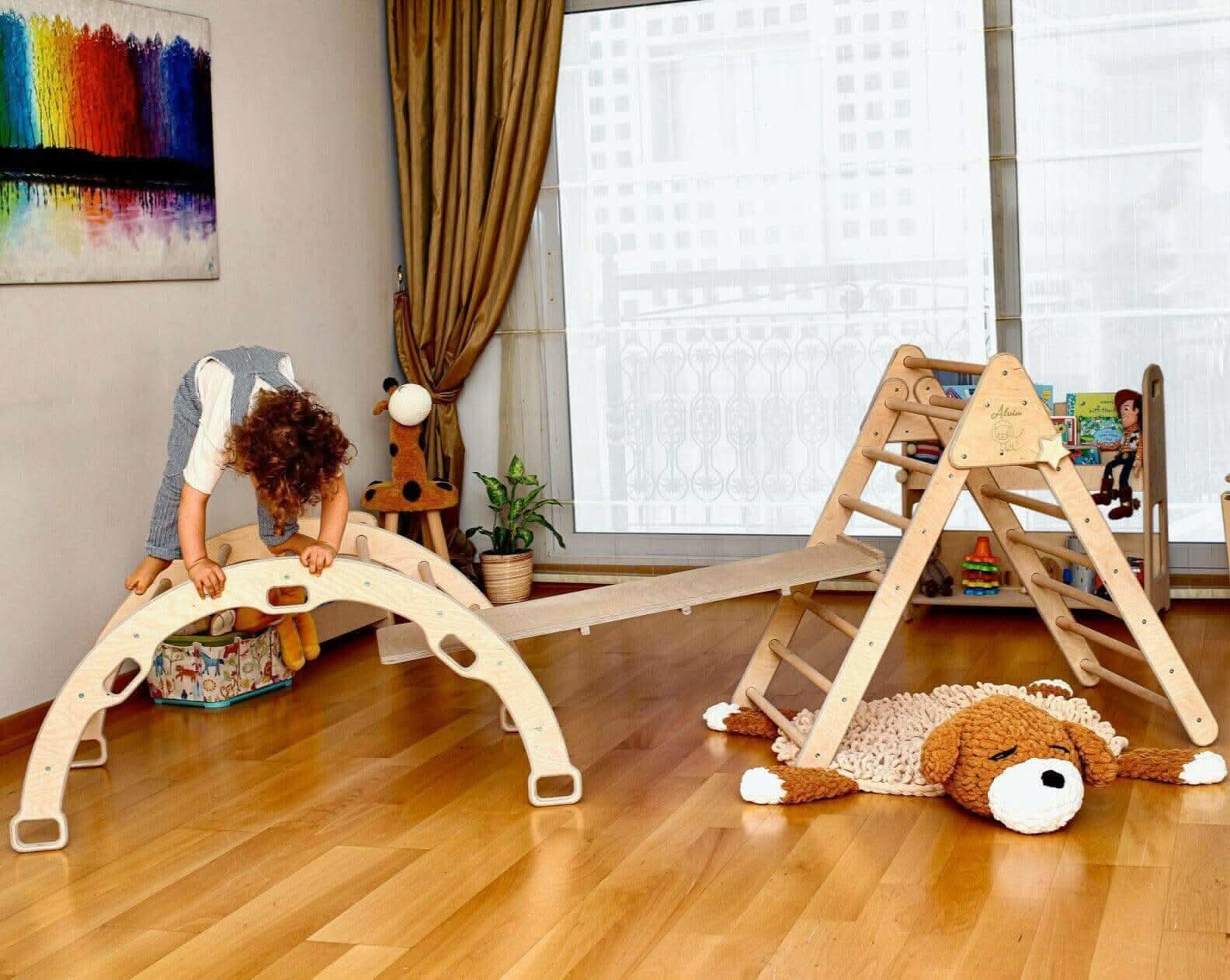
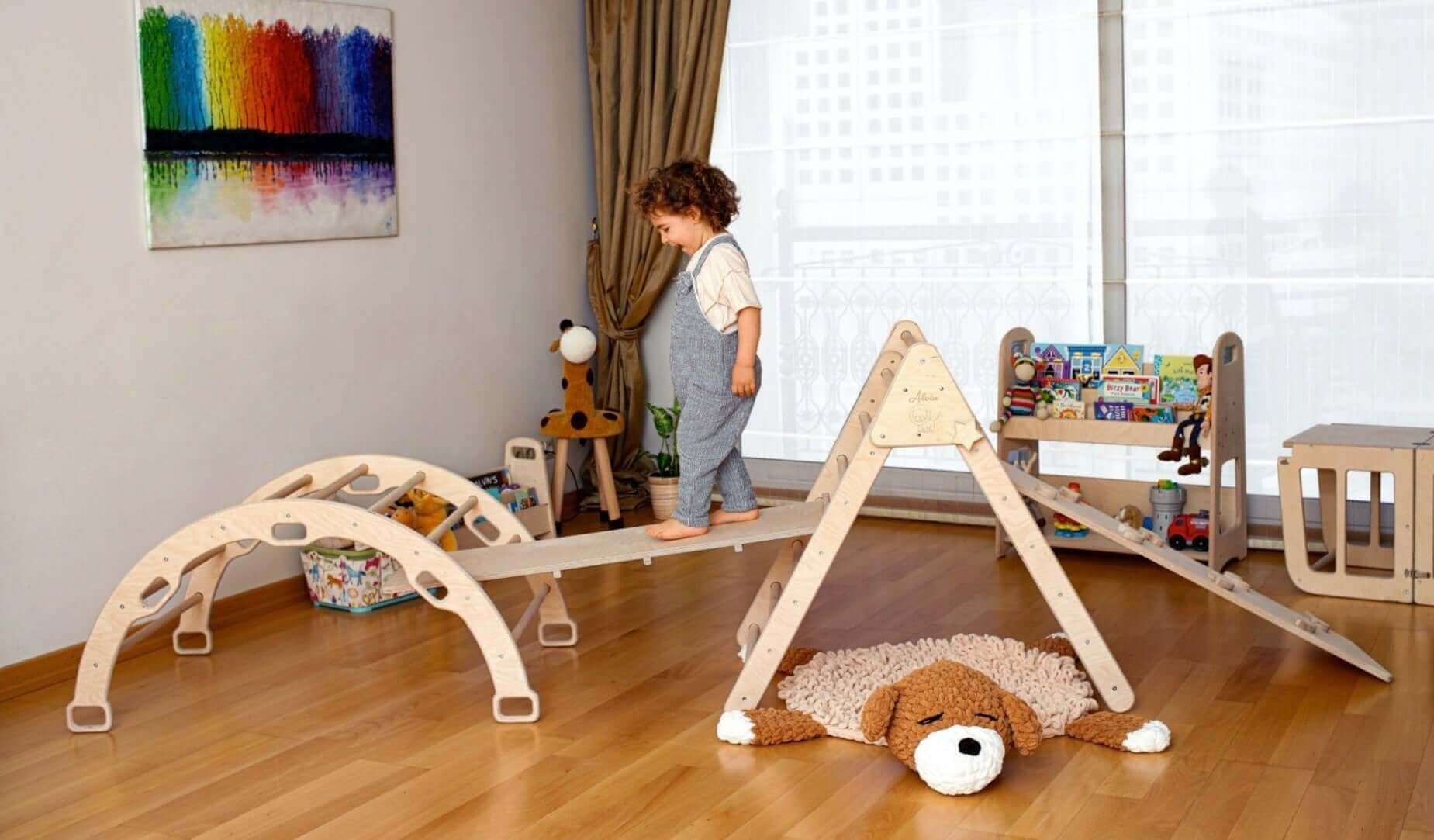
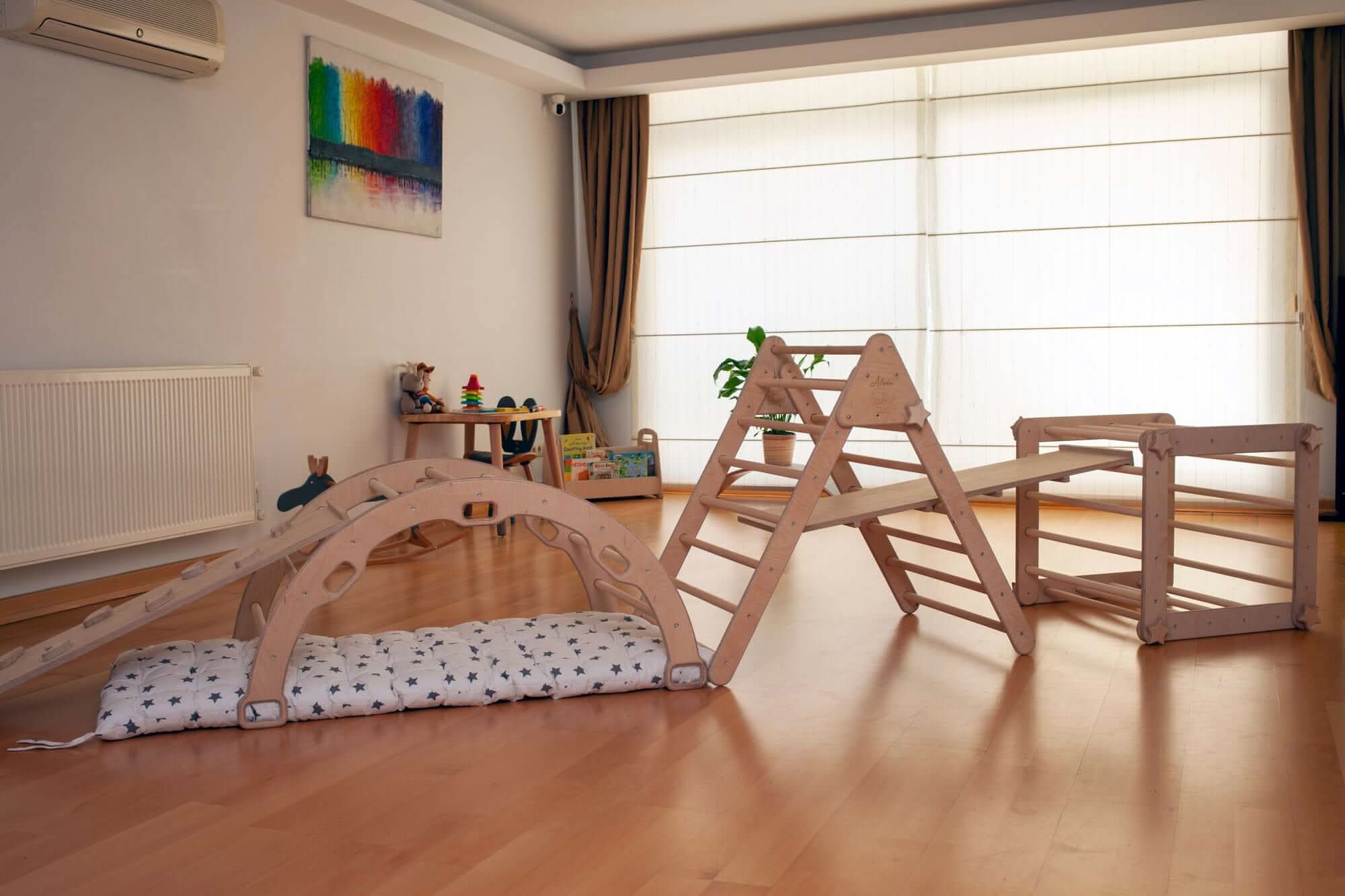
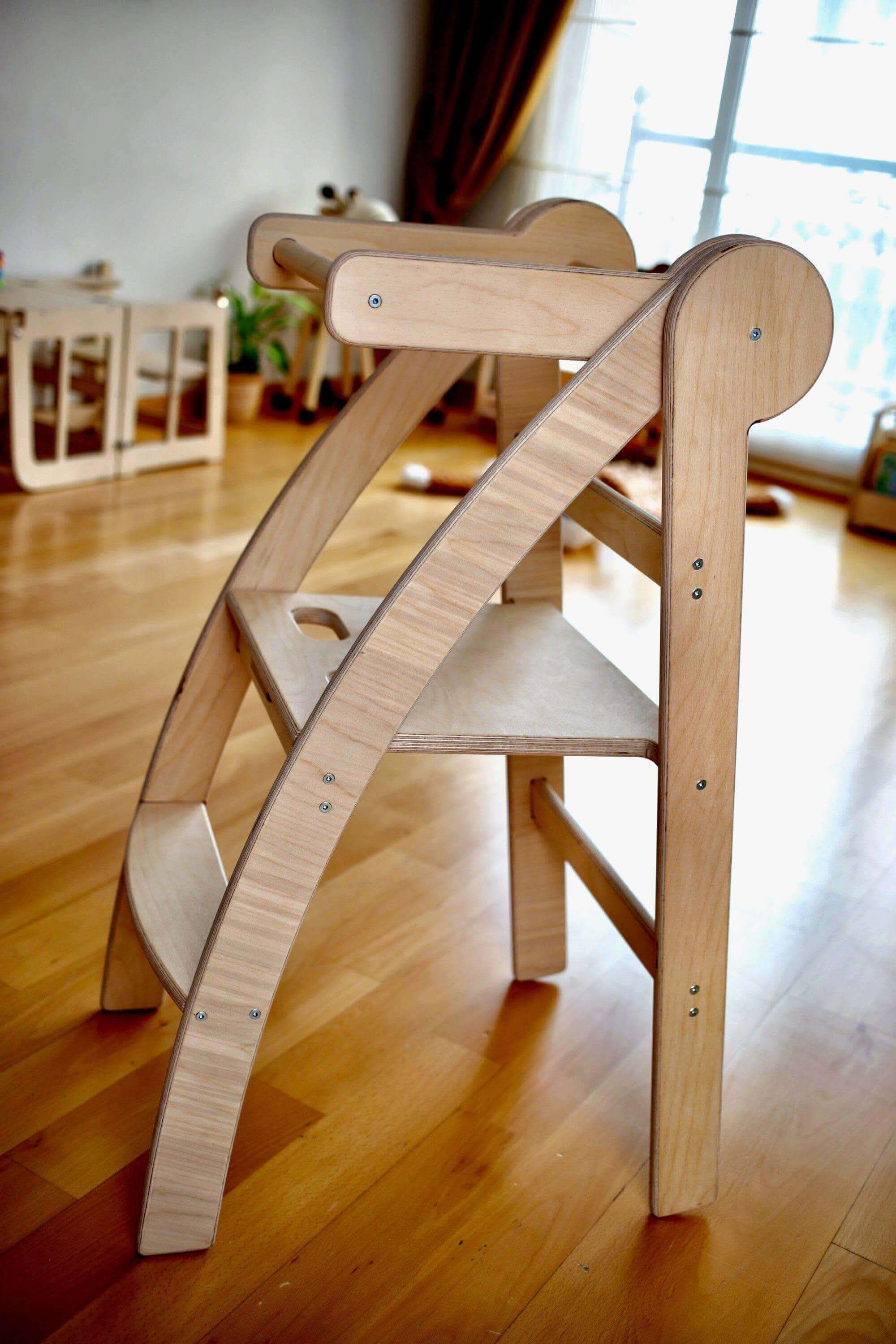
Turn a shelf and a small floor patch into a hands on learning zone that supports independence, motor skills, and practical life participation. This practical how to shows how to combine a learning tower toddler, montessori bookshelf, balance board, balance Toys, pikler triangle set, and pikler triangle into a compact, child safe layout with exact dimensions, placement rules, and simple DIY or buy lists. You will get small space layouts, safety and anchoring checklists, and rotation tactics that reduce clutter and boost sustained play.
Design Principles for a Montessori Bookshelf and Learning Zone
Principle first: make the space usable from the child level. A Montessori-inspired shelf and adjacent activity zone must prioritize reachability, clear sight lines, and predictable order before anything else. If a child cannot comfortably see or touch materials, design elegance does not translate into learning.
Key dimensions and spatial rules
- Shelf heights by age: 25-35 cm for infants 6-18 months, 35-50 cm for toddlers 18-36 months, and 50-65 cm for older preschoolers - choose one primary height for the room and adapt a secondary unit if needed.
- Shelf depth: 18-24 cm to suit board books and small manipulatives; deeper shelves hide materials and reduce selection.
- Display lip: 2-4 cm front lip for front-facing books keeps them upright while keeping covers visible.
- Clearances for active furniture: leave 30-45 cm between a climbing frame and shelving and 60-90 cm of circulation in front of a learning tower or balance Toys to allow safe movement.
Trade-off to accept: front-facing displays increase independent selection but cut storage capacity by roughly half. In small spaces you must choose between depth of engagement and volume of choices; rotate aggressively if you choose display over capacity.
Placement and material judgments that matter: prefer low, wide units over tall narrow ones for stability. Use solid wood or birch plywood with rounded edges and water based finishes that meet safety standards. Anchor all shelving to studs and use non slip pads under active furniture - the practical benefit of a stable, anchored low shelf is immediate: fewer crises and more uninterrupted play.
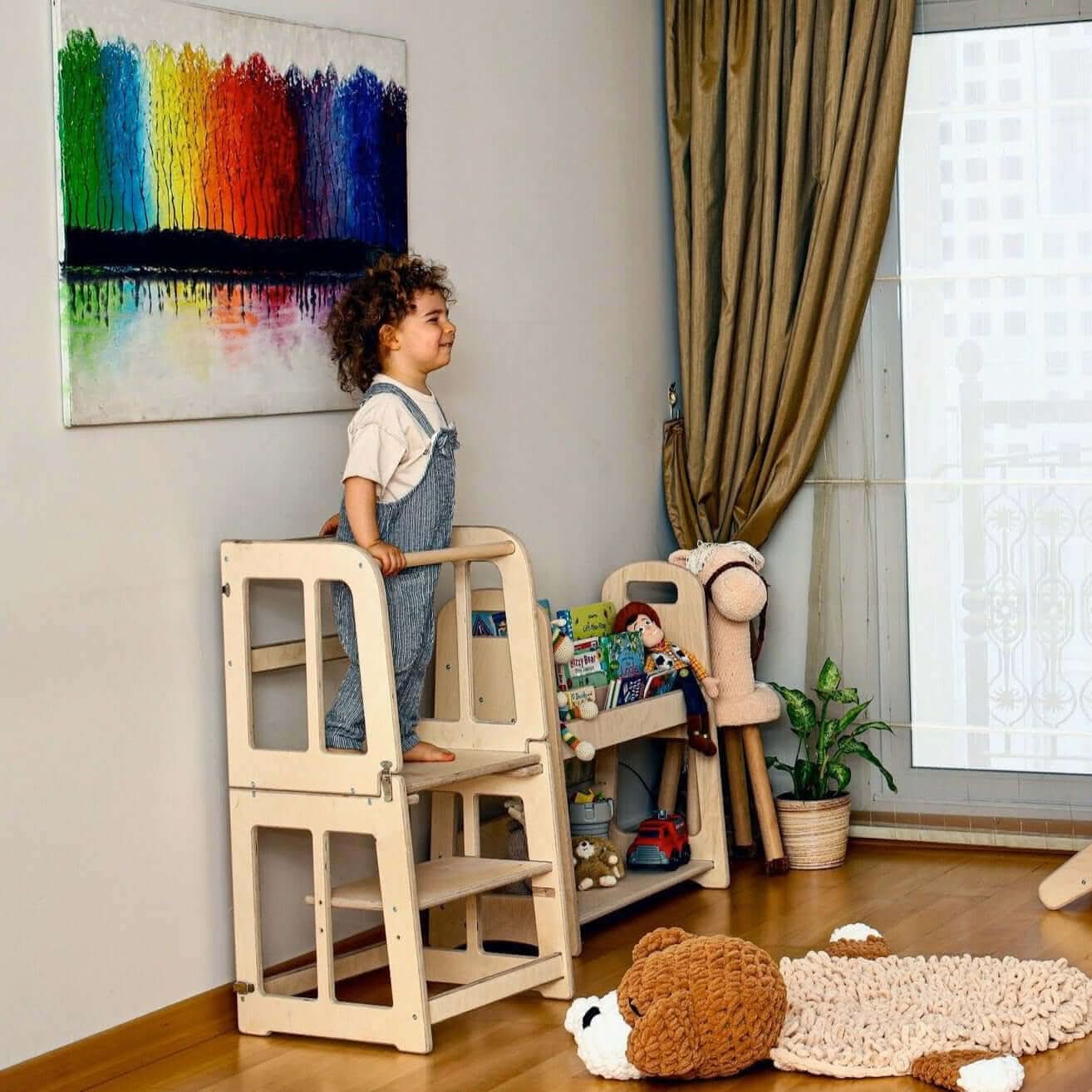
Concrete example: In an 8 square metre corner, install a 90 cm wide, 40 cm high three-shelf unit with the top shelf at 35 cm. Position a compact learning tower 10 cm to the side with a 65 cm rug in front for circulation; store a balance board vertically under the lowest shelf when not in use. This layout lets a 2 year old pull a book, bring it to the rug, and use the tower for supervised kitchen tasks without crossing traffic paths.
Design for interaction - place caregiver seating within sight and reach, not across the room; proximity increases confident independent attempts.
Safety must be built in, not added later. Anchor shelving to studs with metal straps, keep a 30-45 cm buffer between climbing equipment and hard shelf edges, and follow basic fall-surface guidelines such as a low-pile rug 1-2 cm thick under active zones. For anchor guidance see CPSC.
Next consideration: once you lock in heights and clearances, commit to a curation rhythm (weekly or biweekly) so the space remains inviting rather than cluttered - design decisions only work when paired with a realistic maintenance plan.
Practical Bookshelf Layouts for Different Rooms and Footprints
Start with traffic flow, not aesthetics. The single biggest mistake I see is treating a bookshelf as art and tacking active equipment into the remaining space. In practice, plan a child pathway first: where will a toddler walk, pull a book, climb, and return to a rug without crossing an adult work zone.
Small apartment corner: compact, convertible, and staged
In tight footprints, prioritize a low-profile unit that doubles as storage and an anchor for active items. Use a 75-90 cm wide shelf, 30-40 cm high, with 20 cm depth for board books and small manipulatives. Place a slim learning tower toddler (choose a model with an adjustable platform) parallel to the shelf with a 25-35 cm gap for safe movement; keep a 50-60 cm clear lane in front so a child can carry a book to the rug.
Practical trade-off: front-facing displays sell engagement but force you to rotate more often. For tiny spaces, display 4-6 covers and keep overflow in labelled bins behind or beneath the shelf. That preserves visual simplicity while letting you swap themes weekly.
Shared playroom: separate zones and intentional sight lines
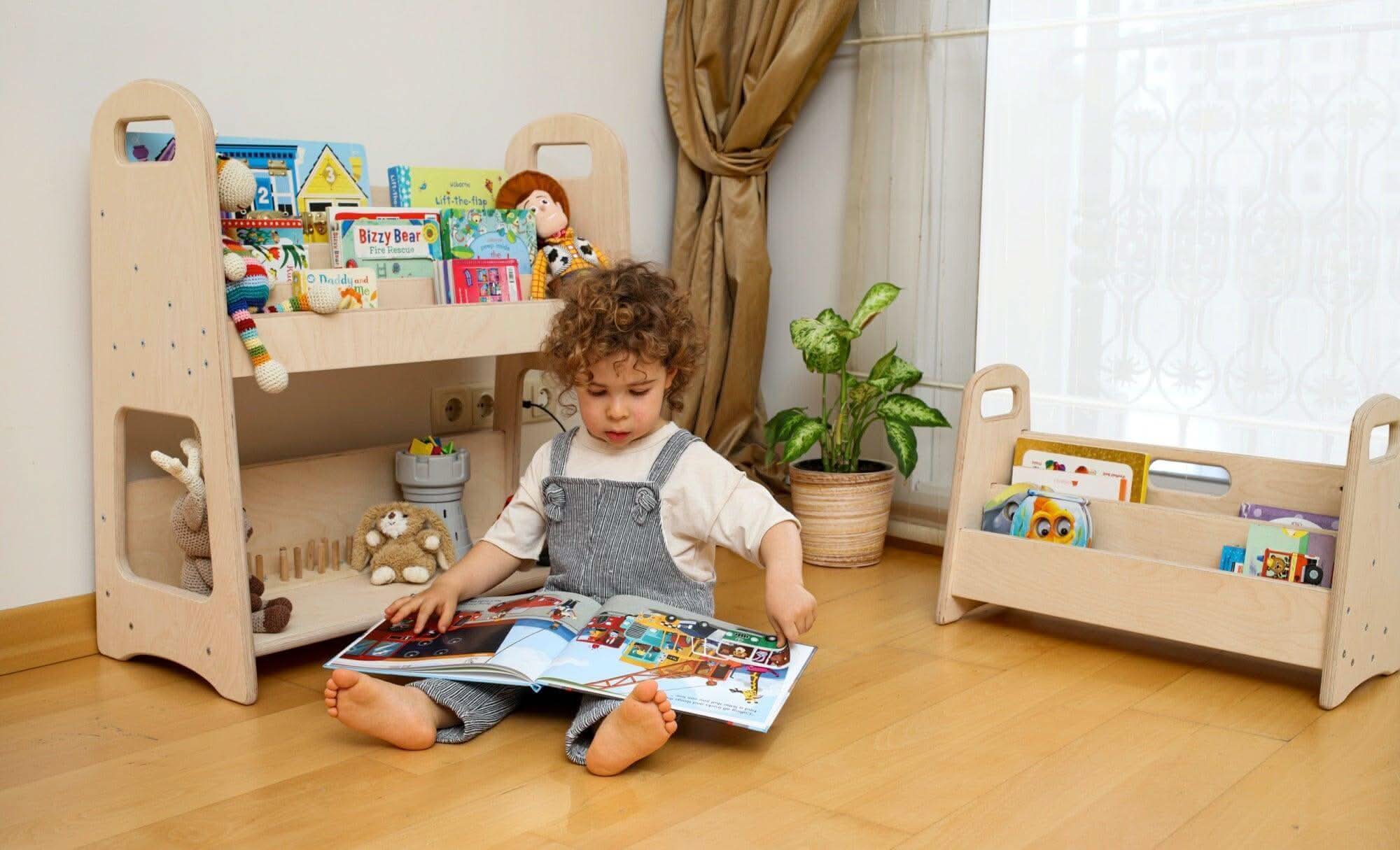
When multiple children or adults use the room, define clear zones: reading, active play, and caregiver station. Install a 120-150 cm wide Montessori bookshelf at 40-50 cm height as the reading anchor. Position a Pikler triangle set 35-50 cm away on an impact-absorbing rug and keep a 80-100 cm movement corridor in front of both the shelf and the climbing area so children can loop between activities without close contact with hard corners.
Judgment call: in group settings, favor wider circulation over extra shelf length. Crowded walking paths are where crashes and habit-forming shunting happen; give kids room to arrive and leave an activity on their own terms.
Kitchen reading and activity shelf: invite participation safely
A cooking corner works when the shelf and learning tower toddler support shared tasks. Mount a low shelf 35-40 cm from the floor beside the counter, leave 10-20 cm between the shelf and the learning tower so the child can step onto the tower without brushing a shelf edge, and ensure the tower platform height clears the counter by 2-5 cm for comfortable access. Store a balance board flat under the lowest shelf or upright in a narrow cubby to preserve floor space.
Limitation to keep in mind: counters and appliances create new hazards. If the kitchen layout forces the tower directly against a hot surface, do not place it there — move the learning zone or use the tower only for cold prep and sensorimotor activities away from heat sources.
Concrete example: In a 12 square metre studio, we replaced a freestanding tall bookcase with a 120 cm long, 35 cm high low shelf and placed a compact Kidodido learning tower 15 cm to the left. A kid could fetch a book, walk 60 cm to the rug, or climb the tower under supervision to help wash fruit. Storing a foldable balance board vertically in a 18 cm slot under the shelf allowed the same items to be used without losing floor area.
Quick rule: always keep 30-45 cm between climbing equipment and shelving edges and at least 50 cm circulation in front of active pieces. For anchoring and hazard details, see CPSC and follow manufacturer instructions such as those on Kidodido learning towers.
Final practical insight: pick layouts that make cleanup obvious. If books and balance Toys have a dedicated, reachable place, kids will return them. That single behavioral win preserves your circulation and keeps active equipment usable instead of becoming cluttered storage.
Integrating Active Furniture: Learning Tower Toddler, Pikler Triangle Set, and Balance Board
Hard rule up front: place active pieces so movement flows, not collides. A learning tower toddler, a pikler triangle set, and a balance board work together when each has a clear entry, a predictable exit, and a sensible home for storage between uses.
How these three pieces should behave in the room
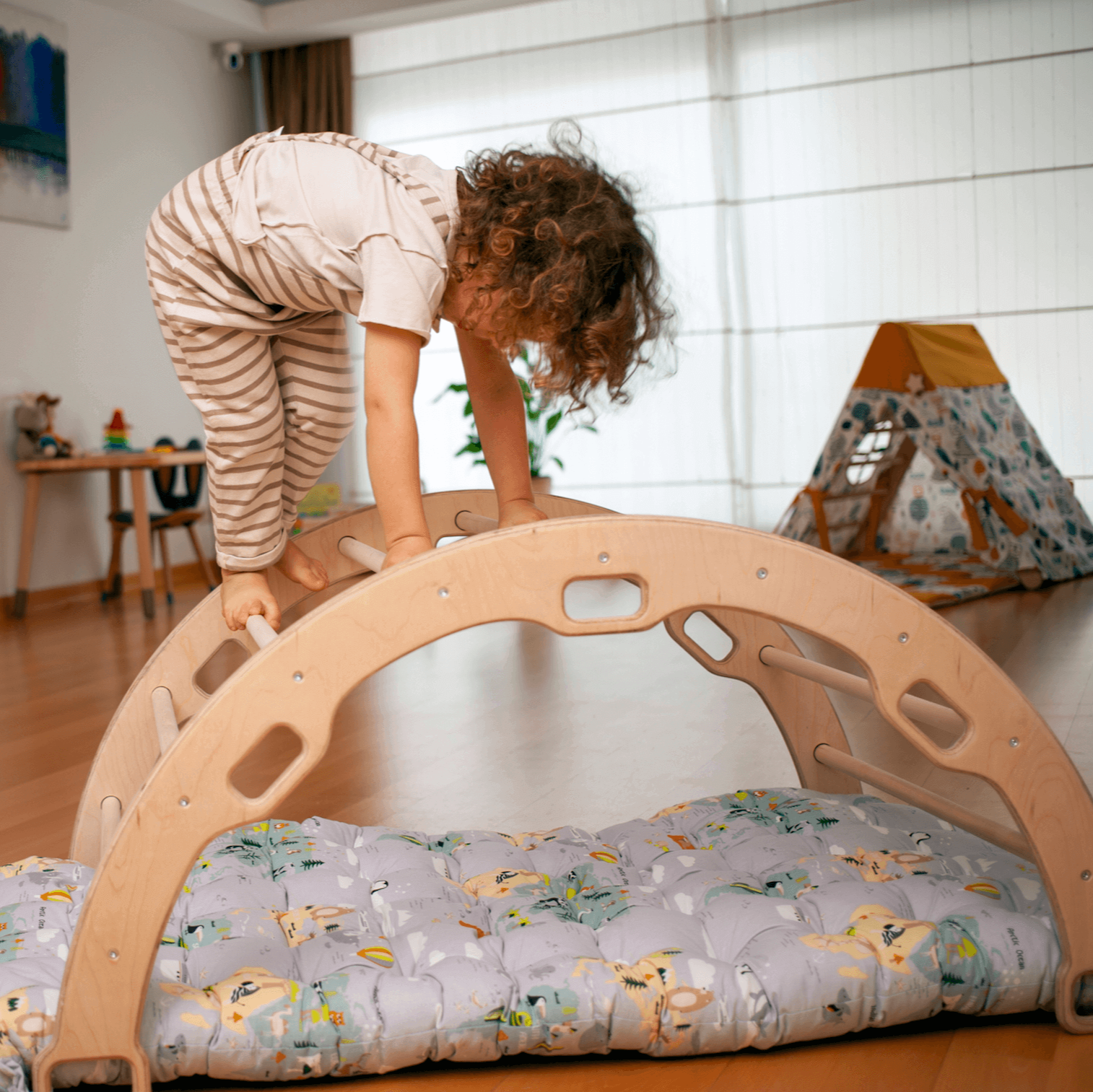
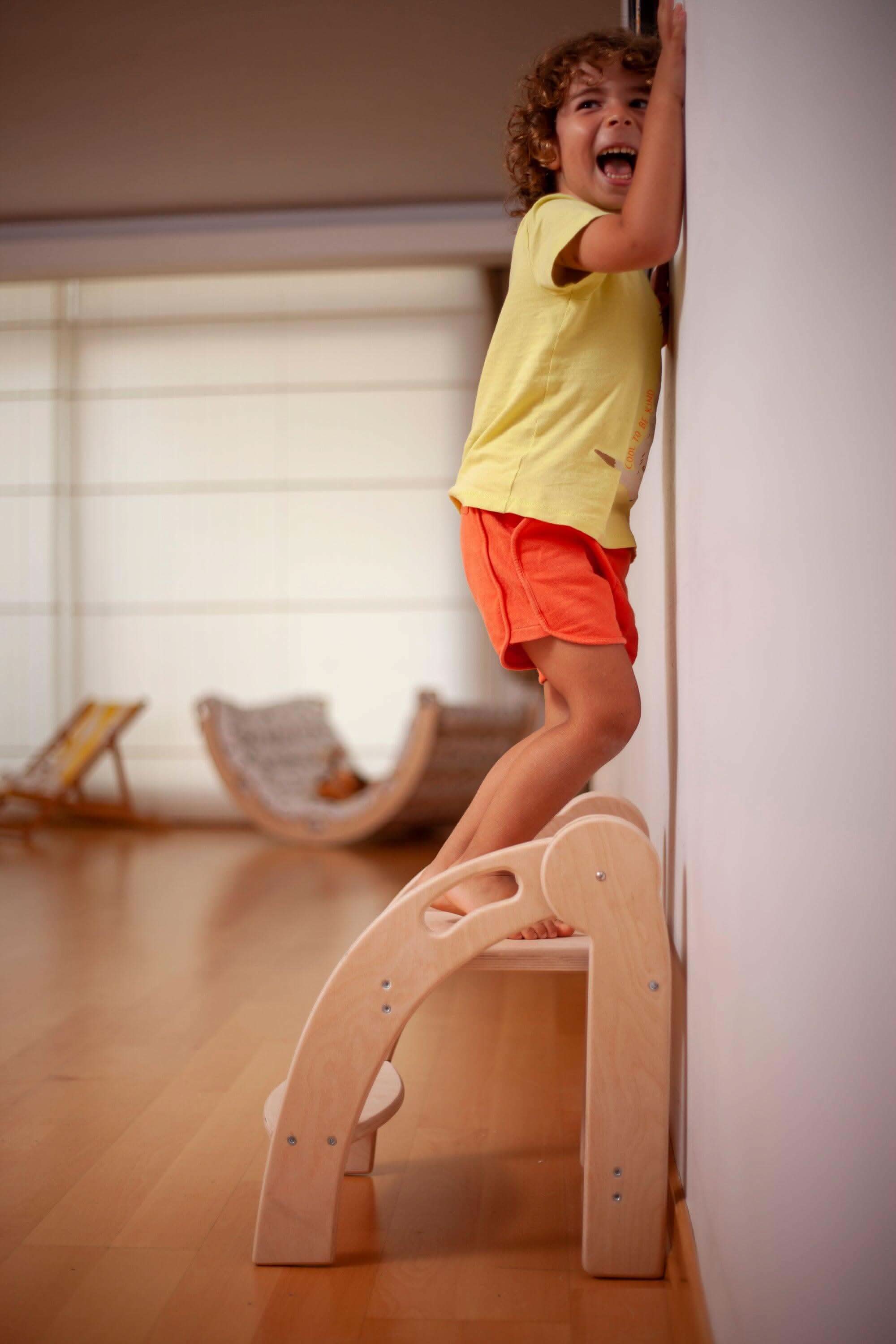
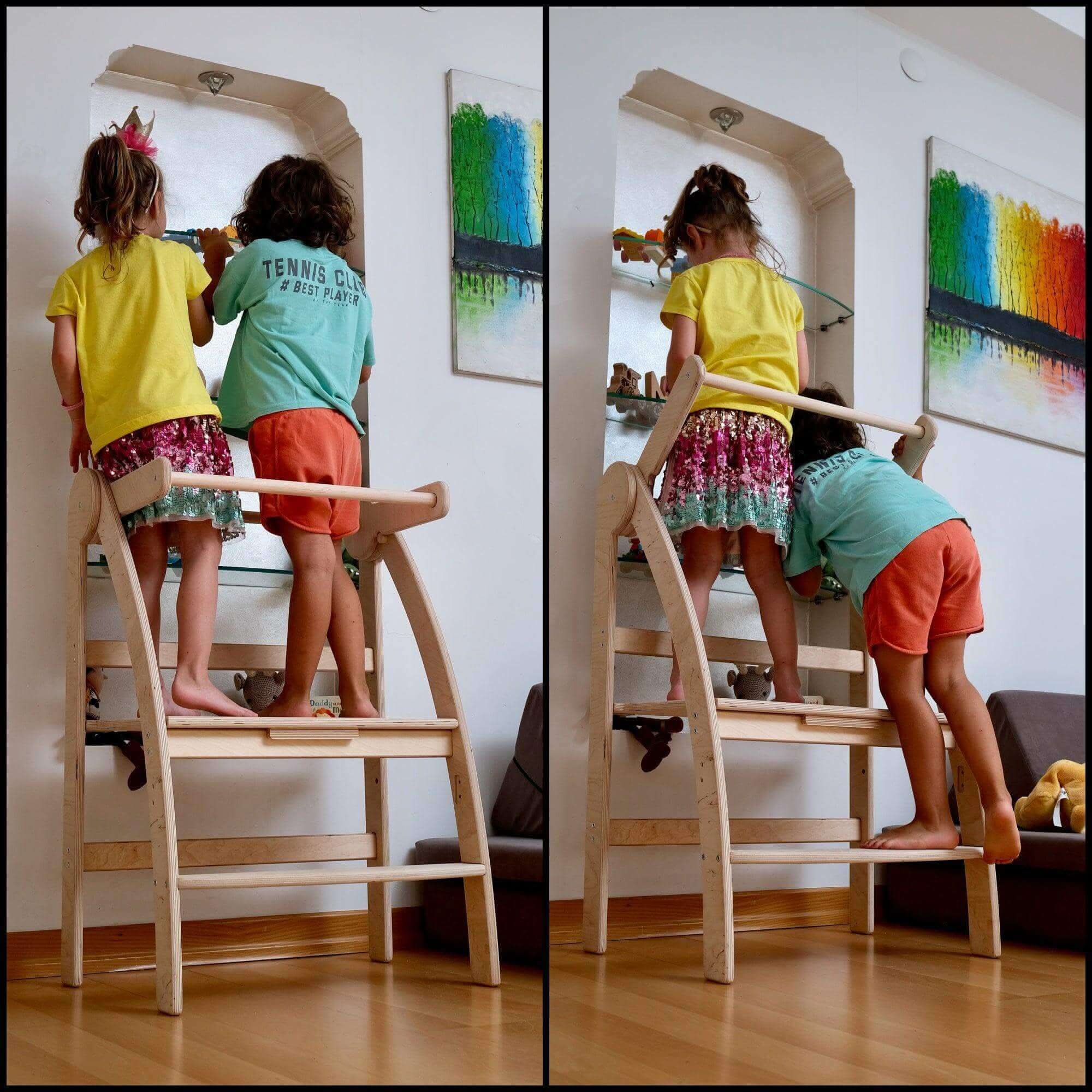
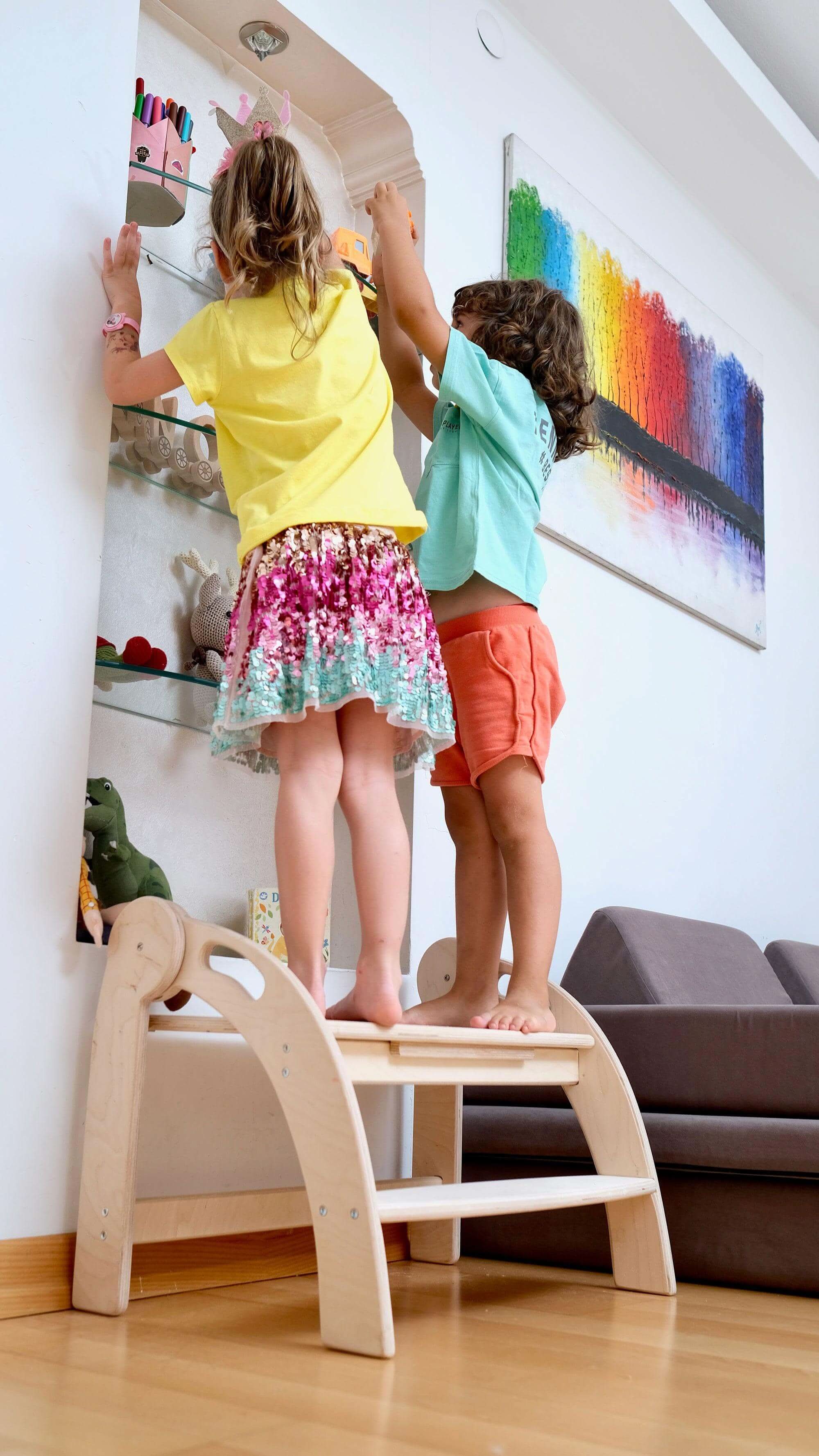
Function split: use the learning tower toddler for participation (kitchen counters, snack prep), the pikler triangle for vertical exploration and graded climbing, and the balance board for short vestibular practice and transitions between activities. They are not interchangeable. Putting a balance board where a child needs to run past will turn it into a trip hazard rather than a developmental tool.
- Placement check: give each piece a defined clearance equivalent to the child's reach plus a small buffer so a child can take two natural steps without hitting another object. Measure using the child rather than fixed numbers for real-world fit.
- Storage rule: store the balance board vertically under or beside the shelf when not in use to preserve floor space; avoid leaving it flat where it becomes a stepping surface.
- Anchoring and surface: place the pikler triangle on an even surface and use non slip pads on the learning tower legs; secure shelving to the wall and keep climbing routes away from hard edges.
Practical trade-off: clustering the tower next to a montessori bookshelf encourages practical life crossover—kids fetch a recipe book and join you at the counter—but increases the chance of a bumped elbow or a knocked-over display. If your child is impulsive or two children use the zone, separate the tower and bookshelf slightly further apart and accept a slightly longer walk between activities.
Daily routines that reduce risk: do a quick equipment sweep before play: check screws on the pikler triangle set, test platform locks on the learning tower, and examine the balance board for splits or warping. A 30 second habit prevents most common failures.
Concrete example: a 2.5 year old we observed used a Kidodido learning tower beside a low shelf to pull a recipe book, climbed down and walked two paces to a soft rug where a Kidodido balance board lay upright until the child pulled it out for a 90 second wobble exercise. The pikler triangle set sat across the rug as a longer play objective; the adult supervised from a seat where they could reach both tower and triangle without standing. This arrangement favored independent fetch-and-return sequences while keeping supervision efficient.
Judgment call parents miss: do not overprotect climbing by surrounding it with giant cushions. That removes meaningful challenge and delays balance development. Instead, control the environment with clear storage, short supervised sessions, and progressive increases in task difficulty on the pikler triangle and balance board.
Key takeaway: design active zones as a small circuit - fetch (bookshelf), participate (learning tower toddler), and return (balance board or rug). This creates predictable movement patterns that support independence while keeping supervision manageable. For product examples see Kidodido learning towers and Kidodido Pikler triangles.
Next consideration: once the layout is working, build habits: short supervised practice sessions, a weekly quick inspection of fasteners and finish, and a one-line family rule for climbing and tower use. Those routines matter more than perfect spacing.
Book and Toy Curation Strategies That Encourage Deep Play
Curate with intention. Fewer visible choices plus deliberate pairings produce longer, deeper play than a crowded shelf. Treat the shelf as a stage: each visible book should invite a small activity that follows immediately — a tactile object, a simple prop, or a matching manipulative placed within arm's reach.
Choice management tactic. Limit visible items to 3–7 curated books and display 2–4 complementary toys nearby. Too many covers dilutes attention. Keep overflow in labelled bins under the shelf so rotation is fast and feels like a swap rather than a hunt.
- Pairing rule: always pair a book with a single open-ended toy or material (not a whole toy set).
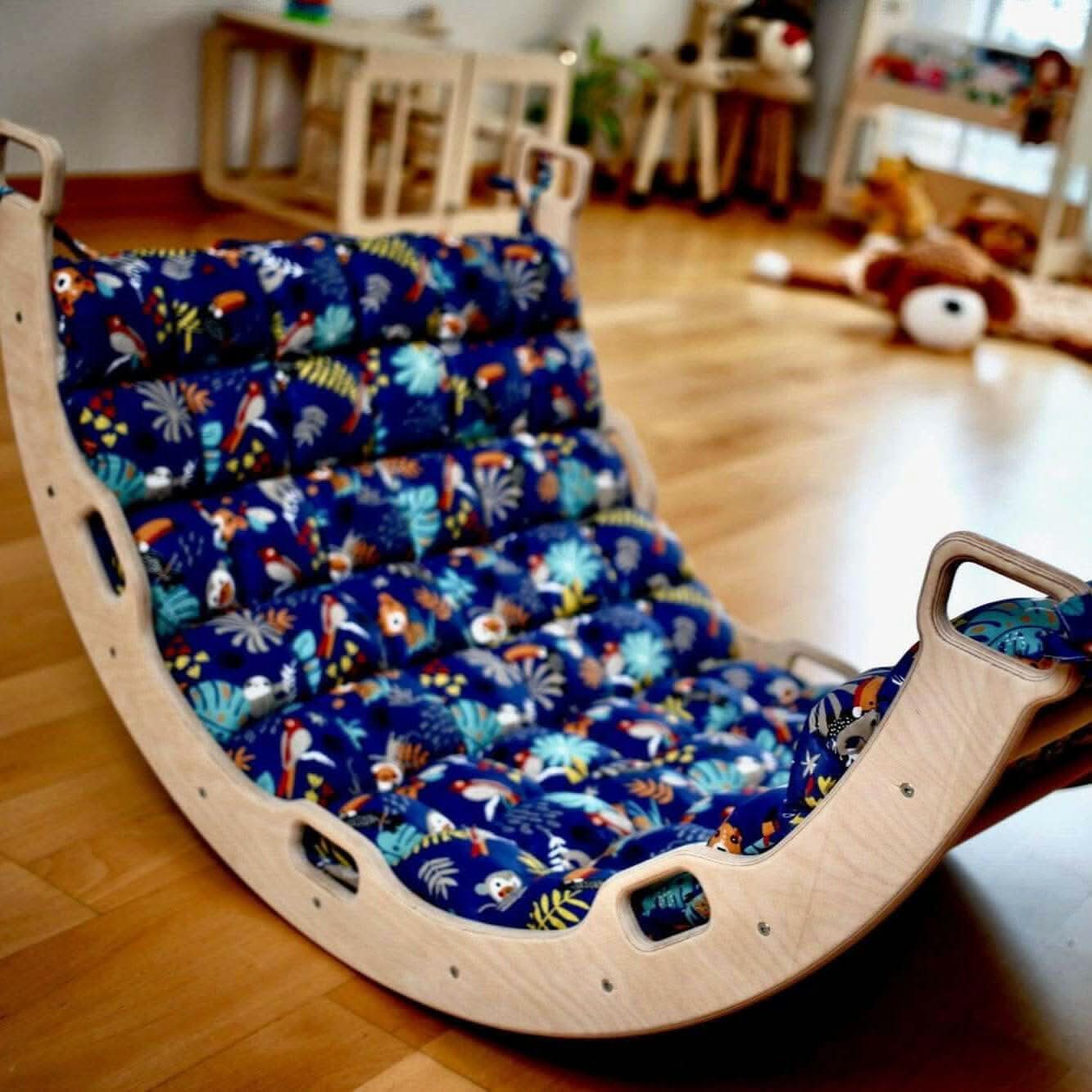
- Sensory match: balance movement books with a vestibular object like a wooden balance board; pair a texture book with felt pieces.
- Skill ladder: place one slightly harder object beside the book to encourage progression (e.g., a tray of tongs after a simple sorting game).
Practical trade-off. Heavy curation sacrifices breadth for depth. That means a child may see the same titles for days — which is good for mastery but risks boredom if you never refresh. Solve this by scheduling small swaps twice weekly rather than large monthly overhauls; short, frequent rotations maintain novelty without overwhelming choice.
Concrete example: A two year old reads a picture book about farm animals placed cover-out on the shelf. Beside it is a small wooden animal set and a shallow tray. The child pulls the book, sets it on the rug, and uses the animals to retell the story — staying engaged longer than with the book alone. After a week, introduce a simple pegboard to encourage next-step fine motor work.
What most caregivers get wrong. They treat books and toys as separate zones. In practice, pairing encourages cross-domain learning: language grows when a child can act out scenes, and balance practice improves attention for reading if tied to a themed movement prop. Avoid battery-operated, noisy items in the primary display; they steal focus and fragment sustained play.
Quick pairing template: 1 book (cover-out) + 1 tactile prop + 1 storage spot. Rotate one element every 3–4 days. For inspiration and product examples, see Kidodido balance boards and the Montessori guide.
Action checklist (30 seconds daily). Inspect the display for damaged pieces, confirm each paired prop is reachable, return overflow to labelled bins, and note one item to swap later that day. This tiny habit keeps the shelf deliberately staged and the learning tower or Pikler area ready for meaningful play.
Next consideration: pick one pairing to try this week and observe — note how long the child engages and what they add spontaneously. Use that evidence to decide whether to deepen the pair, introduce a slightly harder prop, or swap themes.
DIY and Budget Friendly Montessori Bookshelf Builds
Start with a constraint: you can build a functional, child safe Montessori bookshelf for a fraction of retail cost, but only if you accept limits on span length, finish time, and tool needs. Cheap plywood and a simple design save money; they also require thoughtful reinforcement and a careful finish to meet safety expectations.
Two practical builds: a lightweight plywood low shelf and an IKEA hack
What to expect from each route. The plywood build is customizable, compact, and repairable; it takes basic carpentry skills and two evenings. The IKEA Trofast/Kallax hack is faster and more stable out of the box but forces fixed interior dimensions and often reduces the ideal front facing display depth.
| Piece | Qty | Metric (mm) | Imperial (in) |
|---|---|---|---|
| Side panels (12 mm birch plywood) | 2 | 400 x 300 | 15.7 x 11.8 |
| Top shelf (12 mm) | 1 | 900 x 240 | 35.4 x 9.4 |
| Middle shelf (12 mm) | 1 | 900 x 240 | 35.4 x 9.4 |
| Bottom shelf (12 mm) | 1 | 900 x 240 | 35.4 x 9.4 |
| Front display lip (12 mm) | 1 | 900 x 40 | 35.4 x 1.6 |
| Back cleat (12 x 30 mm solid wood) | 1 | 860 x 30 | 33.9 x 1.2 |
- Essential tools: circular saw or table saw, cordless drill, 1.5 mm wood glue, 30-40 mm wood screws, sanding block with 120 and 220 grit.
- Fasteners and hardware: 30-40 mm countersunk screws, small metal L brackets for underside support, two wall anchor straps for stud anchoring.
- Finish and safety items: water based, low VOC finish certified to safety standards; fine sandpaper to round edges to a 6 12 mm radius; non slip pads for the base.
Practical insight on material thickness and span. Using 12 mm plywood keeps cost and weight low, but spans longer than 90 cm will bow under load unless you add a center support or use a thicker front lip. If you need a wider unit, increase plywood to 18 mm or add an internal cleat under each shelf.
Step summary for the plywood build. Cut panels to size, sand edges and round corners, assemble sides and shelves with glue and screws, fix the front display lip so covers tilt back 10 15 degrees, attach the back cleat for anchoring, finish with two thin coats of certified water based finish and allow full cure before use.
IKEA hack adjustments that matter. If you use a Trofast or Kallax unit, remove deep interior bins, cut a shallow front lip from scrap plywood to create a cover-out display, and screw a back cleat to the wall through the unit for stability. This is fast and inexpensive but you will sacrifice some display height and will likely need bins for overflow.
Concrete example: A parent in a small apartment used the plywood plan above with a 900 mm width to make a shelf that sits at 350 mm high. They added a 900 x 40 mm front lip set at a slight angle so board books sit cover-out. The whole build cost about one quarter of a premade piece and still left room under the bottom shelf to store a balance board upright.
Safety note: use a certified low VOC finish and anchor the finished unit to studs with metal straps. If you are not comfortable with structural decisions or electrical tool use, buy a tested, ready made Montessori furniture piece instead and repurpose the time saved for curation and supervision. See CPSC for anchoring guidance and Kidodido learning towers for example ready made options.
Tradeoff to acknowledge and the next consideration: DIY saves money and allows custom heights, but it requires time, basic tools, and attention to finish cure and anchoring. If you proceed, prioritize a simple build you can test with your child for a week and iterate based on how they pull, carry, and return materials.
Safety, Ergonomics, and Installation Checklist
Start with measurable tests, not assurances. Safety for a bookshelf paired with active furniture is a set of simple, repeatable checks you do once during install and then in 30 seconds before play. Treat these checks like seatbelts: quick, nonnegotiable, and evidence-based.
Pre-installation and anchoring steps
- Confirm mounting surface: locate a structural stud or solid blocking. If you must use hollow wall anchors, choose rated toggle anchors and accept that the unit is semi-permanent once fastened.
- Choose anchor depth by structure, not habit: fasteners should penetrate the stud or blocking far enough to bite wood — roughly 1.5 inches (38 mm) minimum — and use metal anti-tip straps that attach low on the unit and high on the wall for leverage.
- Pre-fit hardware: assemble the shelf and active pieces on the floor so you know where straps and brackets land. Mark attachment points, then pre-drill to avoid splitting and to get consistent screw torque.
- Stability proof test: with the unit anchored, apply lateral force near the top (lean and push) and place a loaded basket on the top shelf to check for movement or creak. If you see deflection, add a center cleat or thicker shelf support before use.
- Anti-slip and floor interface: fit non-slip pads to active furniture feet and the shelf base. For renters, use removable protective pads under straps and choose anchors that can be replaced with drywall plugs when you move.
Ergonomics and child-fit checklist
- Visual reach test: sit the child where they would normally pick a book; they should be able to see and grasp covers without standing on tiptoe or fully extending an arm.
- Platform and step validation: have the child step onto the learning tower and climb down while you hold lightly at first; the platform should let their knees bend slightly and their feet sit flat on the step when engaged in activities.
- Movement path rehearsal: watch the child fetch a book and carry it to the rug. Confirm they can take two natural steps without brushing a shelf edge or crossing an adult work path; if not, reposition equipment.
- Pinch and sharp-point sweep: run your hand along all joints, hinges, and ladder rungs to feel for gaps, protruding screws, or bite points. Round or cover any spots where a fingertip could trap.
- Finish and odor check: finishes can feel dry but remain chemically active. Follow the product label for cure time and ventilation; if a finish still smells after the stated cure, delay first use.
Practical trade-off to accept: an immovable, well-anchored shelf restricts room reconfiguration but reduces the single biggest risk — tipping. If you value flexibility (renters, shifting layouts), accept higher daily discipline: 30-second pre-play checks and stricter storage habits for active pieces.
Inspection cadence and lifespan checks. Do a quick hardware check weekly for the first month, then monthly thereafter: tighten visible screws, inspect anti-slip pads for wear, and look for hairline cracks in wooden rungs or balance boards. Replace any piece showing structural fatigue rather than attempting a field repair on a load-bearing component.
Concrete example: A parent installed a Kidodido learning tower beside a low bookshelf in a kitchen by first seating their 22-month-old on the tower and adjusting the platform so the child could reach a snack bowl with a slight bend in the elbow. They anchored the shelf into wall blocking with metal straps (fasteners penetrating into the stud), performed a lateral push test while a small loaded basket sat on the top shelf, and then taught the child a simple climb routine — step, hold the rail, sit briefly — practiced with an adult hand on the back until independent descent was smooth. The balance board was stored upright under the shelf between uses to keep the path clear.
Do the child-fit: if the child cannot do the task twice independently and safely during your supervised trial, the setup needs an adjustment.
Must-do before first play: anchor or brace the unit; perform the child-fit climb and reach tests; run the stability proof test. For anchoring guidance and recommended best practices, consult CPSC furniture tip-over guidance and review your furniture manufacturer instructions such as those on Kidodido learning towers.
Maintaining and Adapting the Learning Space as the Child Grows
Maintenance is an active design task, not a one-time setup. As your child moves through new motor and cognitive milestones, small physical adjustments to the montessori bookshelf, learning tower toddler, pikler triangle, and wooden balance board keep the space useful and safe without a full redesign.
Practical changes by stage
12 to 18 months: Lower the most-used shelf faces so covers are fully reachable and remove toys that require complex bimanual manipulation. Keep the learning tower platform on the lowest safe setting and keep the pikler triangle set in its simplest configuration - no ramp attachments yet. Supervision stays hands-on during climbing and balance practice.
2 to 3 years: Increase challenge deliberately. Raise one shelf row a few centimetres to nudge standing and stretching, introduce a low toddler learning stool or slightly higher learning tower platform for short tasks, and swap simple stacking toys for puzzles or peg activities. Start supervised short sessions on the balance board and encourage transition sequences - fetch a book, wobble 30 60 seconds, sit and read.
4 to 5 years: Re-purpose low storage into more complex invitations to play - multi-step puzzles, small tools for practical life, and a higher shelf for emergent independence. The Pikler climbing triangle can be used in composite configurations with ramps or small slides; reduce direct supervision gradually but keep periodic stability checks on all wooden play structures for kids.
Trade-off to accept: pushing challenge too fast increases falls and frustration; keeping everything too easy stagnates development. The correct approach is incremental change - one variable at a time - and observe for 3 to 7 days before the next change.
Concrete example: A family rotated three items every six weeks. At 20 months they swapped a pile of soft toys for a small tray with tongs and a counting book; the child used the Kidodido balance board for short vestibular breaks before returning to the rug. By 30 months the same child was using the learning tower toddler at a higher platform to help stir batter while a Pikler triangle ramp provided a supervised descent practice - all changes were small and reversible.
Six month reassessment checklist
Run this quick routine every half year or after any major developmental jump.
- Observe: watch one independent activity cycle from fetch to return and note any awkward reaches or collisions.
- Adjust: move one shelf or platform by 20 to 40 mm (about 3 8 inch) rather than multiple changes at once.
- Inspect: test fasteners on the pikler triangle, learning tower rails, and balance board for looseness or wear.
- Curate: rotate 2 4 books or replace one prop with a slightly more complex alternative.
- Rehome: bag outgrown items, sanitize, measure and label for donation or sibling reuse.
- Record: log the change, date, and child response in a simple note so you can see patterns over time.
Key point: small, documented adjustments beat infrequent overhauls. Change one thing, observe, and only then change another. For practical product examples and replacement parts see Kidodido collections and the Montessori guide.
Common misconception: parents often think more toys or higher difficulty equals better development. In practice, consistent, reachable materials and predictable movement patterns produce better gains in concentration and gross motor control than a crowded, ever-changing room.
Next consideration: schedule the next reassessment in your calendar and include the primary caregiver and any regular babysitter so everyone applies the same small-step rules. If structural concerns arise, consult CPSC guidance or consider a tested Montessori furniture for kids rather than attempting a complex field repair.